The Dashboard Said Green. The Organization Was Already Failing.
When every light is green and things still feel off, the problem isn’t effort. It’s your instruments.
Published June 28, 2026 · 1 min read
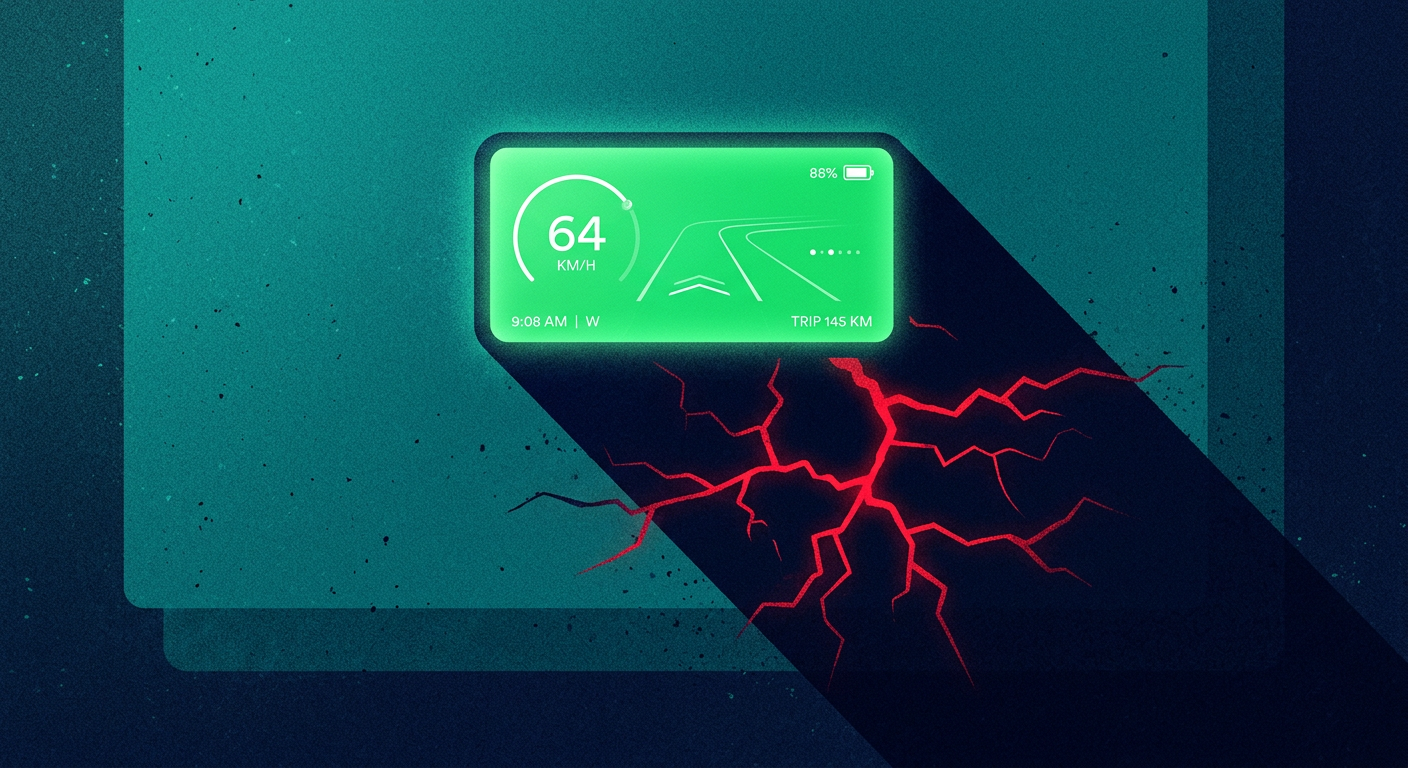
Monday 9 a.m., everything green
The ops review started on time. The screen filled with the scorecard: twenty-two green, two yellow, zero red. Shipments on schedule. NPS up two points. Pipeline at 4.2x. Support SLAs 97%.
Halfway through the CFO’s walk-through, my phone buzzed. Our biggest enterprise customer had escalated—again. Another late implementation. Three teams pointing at each other. The account manager was already drafting a make-good.
Across the table, the head of engineering mentioned, almost as an aside, that two senior backend devs had resigned. "Personal reasons," he said. Sales added that a few big deals were "pushing to next quarter." Nobody changed a slide. The lights stayed green.
We adjourned with handshakes. The dashboard said we were fine. The organization, in motion and on the ground, was already failing.
The cracks everyone could hear
By Tuesday, support tickets hit an unusual spike. Not a flood—just a steady drip of "still waiting" and "where is my login?" that never cleared.
Wednesday, a product manager admitted we were "on time" for the release because the team had moved four features to "phase two"—a phase that didn’t exist last month.
Thursday, the head of Customer Success sent a quiet note: the "green" NPS was based on a 9% response rate, and the angriest accounts weren’t responding at all. The only customers being surveyed were the ones who found the adoption email.
By Friday, it was obvious: the story the dashboard told and the story the organization lived were not the same story.
The hidden problem: dashboards that domesticate reality
We didn’t have a performance problem. We had an instrument problem. Our dashboard wasn’t lying; it was domesticated—tidy, binary, and backwards-looking.
It was built to show compliance against targets we chose last year. It averaged away the pain at the edges. It colored thresholds to reassure, not to warn. It was maintained by the people being measured. And it was elegant enough to make skepticism feel like rudeness.
That’s how healthy-looking dashboards coexist with creeping failure. They compress complicated, noisy, lagging truths into a clean grid. And clean grids hide direction, variance, and risk.
How good metrics go bad
The slide was beautiful. The mechanisms underneath were not.
-
Lag masquerading as progress: "On-time delivery" improved because due dates moved, not because cycle time shrank. The lag between promise and pain stayed the same; the instrument relabeled it.
-
Averages that hide tails: Mean response time was green while the 90th percentile was getting worse. A few customers waited hours, offset by many trivial tickets handled in minutes.
-
Binary thresholds invite gaming: 95% SLA turned yellow at 94.9%. So tickets were reclassified to "waiting on customer" at minute 59. The timer stopped, and the light stayed green.
-
Smoothing smothers warnings: A 12-week rolling average looked stable while the last three weeks bent down. The trend was buried under the past’s comfort.
-
Sampling that flatters: NPS drew from a friendly slice—recent wins and active users. Churned customers couldn’t answer. Silent accounts weren’t asked.
-
Ownership conflicts: The same team built the metric, set the threshold, and reported success. Nobody audited definitions when the work changed.
-
Composite numbers that hide causes: "Pipeline coverage 4.2x" felt safe, but quality and stage-age were rotten. The top-line hid rot in the mix.
A dashboard like this doesn’t tell you how the system behaves. It tells you how the system is explained.
Build a truth system, not a slide
Leaders don’t need more numbers. They need earlier truth. That requires design, not decoration.
-
Replace binary with trajectory: Show slope and distribution, not just pass/fail. Median, p90, and p99 for response, cycle time, and wait times. Use sparklines, not stoplights.
-
Instrument latency to learn: Measure time-to-detect and time-to-acknowledge issues. If it takes two weeks to see slippage, the dashboard is a scrapbook, not a sensor.
-
Cross-check each green with a disconfirming test: If NPS is up, inspect renewal objections and refund rates. If on-time delivery is green, sample expedite requests and feature deferrals.
-
Randomly sample raw reality every week: Five support tickets, three escalations, two lost deals, one customer call—no slides, only screenshots and transcripts. Anomalies beat averages.
-
Define metrics like contracts: Owner, formula, data source, exclusions, and failure modes. Who can change the threshold? What prevents reclassification? Audit definitions monthly.
-
Put tails on the table: Force a review of the worst 5% of experiences each month. Who had the longest wait? Which deal aged out? What cluster of bugs caused repeat pain?
-
Tie incentives to improvement, not level: Reward meaningful deltas and hard problems. Level-based bonuses ("stay above 95%") breed threshold gaming.
-
Create a front-line signal channel: A persistent, open thread where account managers, support, and ops post anomalies in real time. Leaders must read it, respond, and connect it to the dashboard.
-
Red team your metrics: Assign a rotating group to break the numbers. How would you game this metric? What excluded data would flip it red? What single customer would invalidate the trend?
-
Shorten the loop between field and board: Add a narrative loop to the number loop. One page of ground truth—quotes, screenshots, exceptions—travels with the scorecard every week.
-
Remove vanity composites: Keep each metric close to a real outcome—cash, cycle time, defects escaped, active use, time to first value. If it needs a footnote to understand, it’s not an indicator; it’s a story.
None of this requires heroics. It requires discomfort: the willingness to see the thing before the thing is obvious, and to make success harder to fake.
What to change on Monday
-
Redesign three core metrics around variance: Response time median/p95, deployment frequency with change failure rate, time to first value by cohort.
-
Add a weekly raw sample review to ops: 20 minutes, no slides. Rotate who brings the samples.
-
Set a maximum smoothing window: No rolling averages longer than 4 weeks without a separate view of the last 14 days.
-
Add a disconfirming check to every green: For each green metric, show the one datapoint that could make it red.
-
Publish metric contracts and audit dates: Who owns what, when it was last tested, and who can change thresholds.
-
Talk to two customers: One happy, one at risk. Ask both what almost broke.
These are small moves with an outsized effect: they move your instruments from applause to early warning.
The point you’ll remember
Green is not proof. It’s a hypothesis. Treat it that way.
Dashboards are promises about how your system behaves. Promises need verification. Build a truth system that can embarrass your slides before your customers embarrass your company.
When the screen says green and your gut says otherwise, believe your gut long enough to go look. The failure is already there. The only question is whether you find it early—when it’s a conversation—or late, when it’s a crisis.
More from Field Notes
- The Real Reason Strategic Priorities Collapse by Q3
Your plan didn’t die from distraction. It died from math you never priced: baseline load, interruptions, and decision delays that crush throughput by midyear.
- Fast Information Is Undermining Your Leadership
Real-time dashboards and constant pings push leaders into reactive mode; here’s how to slow decision cycles without slowing the business.
- Your Leadership Team Knows Too Much to Decide Fast
Executives drown in updates and starve for clarity. The fix isn’t more data; it’s redesigning how information moves so decisions happen at speed and at the right altitude.