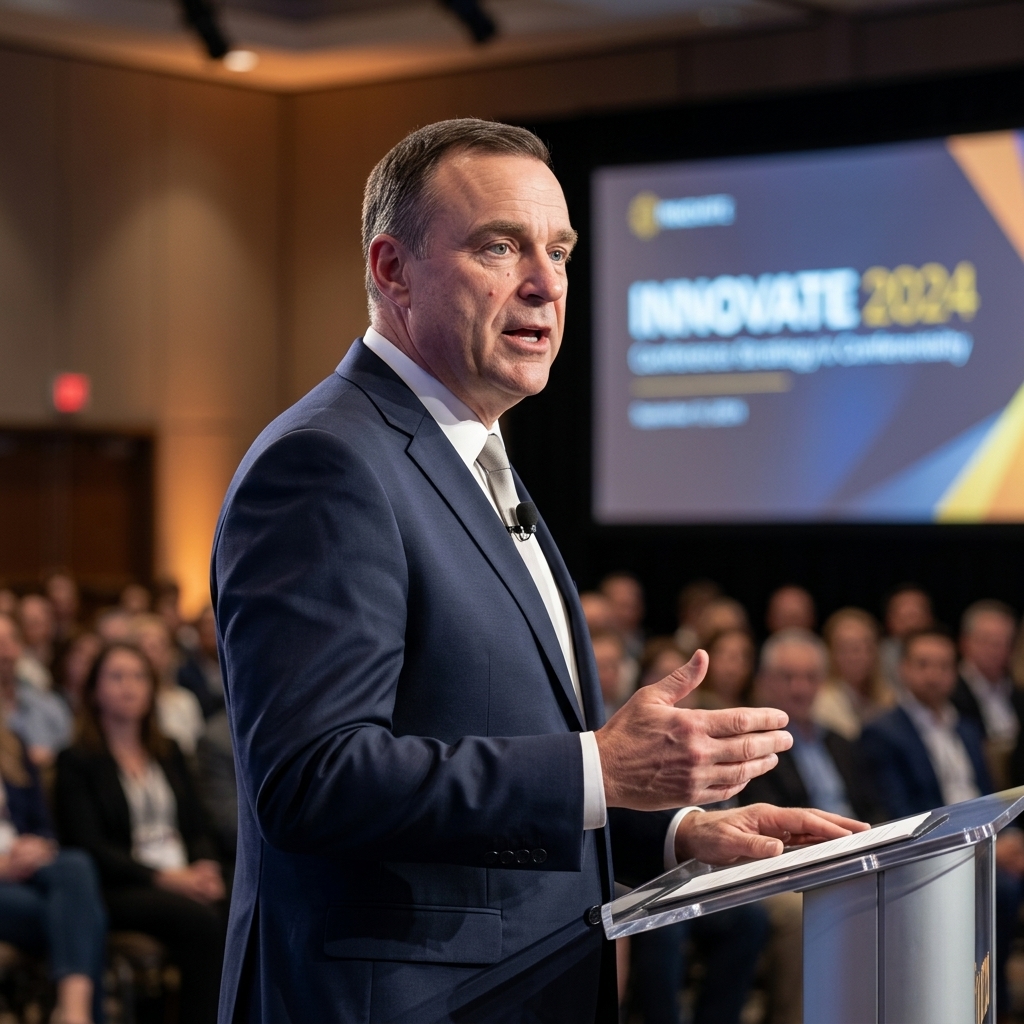
Speaking
Speaking, panels, and podcast appearances on Decision Architecture, capital allocation, and the modern CFO's role in PE-backed mid-market companies.
Available for keynotes, panels, board education sessions, and podcast appearances. Audiences include PE operating partners, mid-market CEOs and CFOs, board members, and finance leaders inside scaling companies. Speaking selectively — typically 8–12 engagements per year.
Signature Topics
Topic 1
Decision Architecture: Why Mid-Market Companies Don't Have a Decision-Making Problem — They Have an Architecture Problem
Most $25M–$150M companies have processes, controls, and approvals — but no architecture. Capital decisions get made in hallways. Decision rights live in someone's head. This talk introduces Decision Architecture as a three-component operating framework — Decision Rights, Decision Logic, Decision Review — and walks through what changes when each component is built deliberately.
Best for: PE operating partner summits, board education sessions, CFO leadership forums.
Topic 2
The Navigator CFO: Why PE Stopped Paying for Historians
The CFO seat has changed. PE firms are no longer paying for someone who can explain last quarter — they're paying for someone who can direct the next four. This talk traces the transition from Historian (variance analysis, monthly close, board reporting) to Navigator (rolling forecasts, capital allocation, decision architecture). Most companies think they have a Navigator. Most actually have a Historian. The talk names the difference and the path between them.
Best for: CFO conferences, mid-market finance leadership programs, PE portfolio CFO gatherings.
Topic 3
Capital Without Governance: The Hidden Cost of Hoarding Cash in PE-Backed Companies
Cash on the balance sheet feels safe. It rarely is. This talk examines the discipline of capital allocation in PE-backed mid-market companies — the difference between deploying capital and burning it, why velocity of deployment matters, and the framework for deciding when to invest, when to return capital, and when to wait. Built on two decades of operator pattern recognition across mid-market companies.
Best for: PE operator events, investor summits, board strategic sessions.
Bio
Short (40 words)
Mark J. Crawford is a CFO and the architect of Decision Architecture — an operating framework for PE-backed mid-market companies, $25M–$150M. He is also an AI Industry Research Analyst.
Medium (100 words)
Mark J. Crawford is a CFO and operator, and the architect of Decision Architecture — the operating framework for how PE-backed mid-market companies execute high-quality decisions at scale. His work spans healthcare services (featured vertical), professional services, multi-state operations, and scaling service businesses. He is also an AI Industry Research Analyst focused on practical AI utility for mid-market finance operations.
Long (250 words)
Mark J. Crawford is a CFO and operator. He is the architect of Decision Architecture, an operating framework for PE-backed mid-market companies built on three components: Decision Rights, Decision Logic, and Decision Review. The framework is the synthesis of two decades of pattern recognition across mid-market companies, founders, and industries — and addresses the core insight that most $25M–$150M companies don't have a decision-making problem; they have a decision architecture problem. Mark is also an AI Industry Research Analyst, focused on practical applications of AI in mid-market finance operations — cutting through hype to identify where AI saves CFO hours and where it's expensive performance. His writing on Decision Architecture, capital allocation, and the modern CFO role appears regularly on Medium and LinkedIn, with consistent reach into the PE operating partner and mid-market CFO communities. He speaks at PE operator summits, CFO leadership programs, board education sessions, and finance industry events. Featured vertical experience: healthcare services. Industry-agnostic experience across professional services, multi-state operations, and scaling service businesses, including M&A integration.