The Most Expensive Word I Said Was 'Maybe'
Maybe feels safe. It isn’t. Every deferral hands your call to someone with less context and skin in the game. Learn to separate real waits from the fear of being wrong.
Published June 14, 2026 · 4 min read
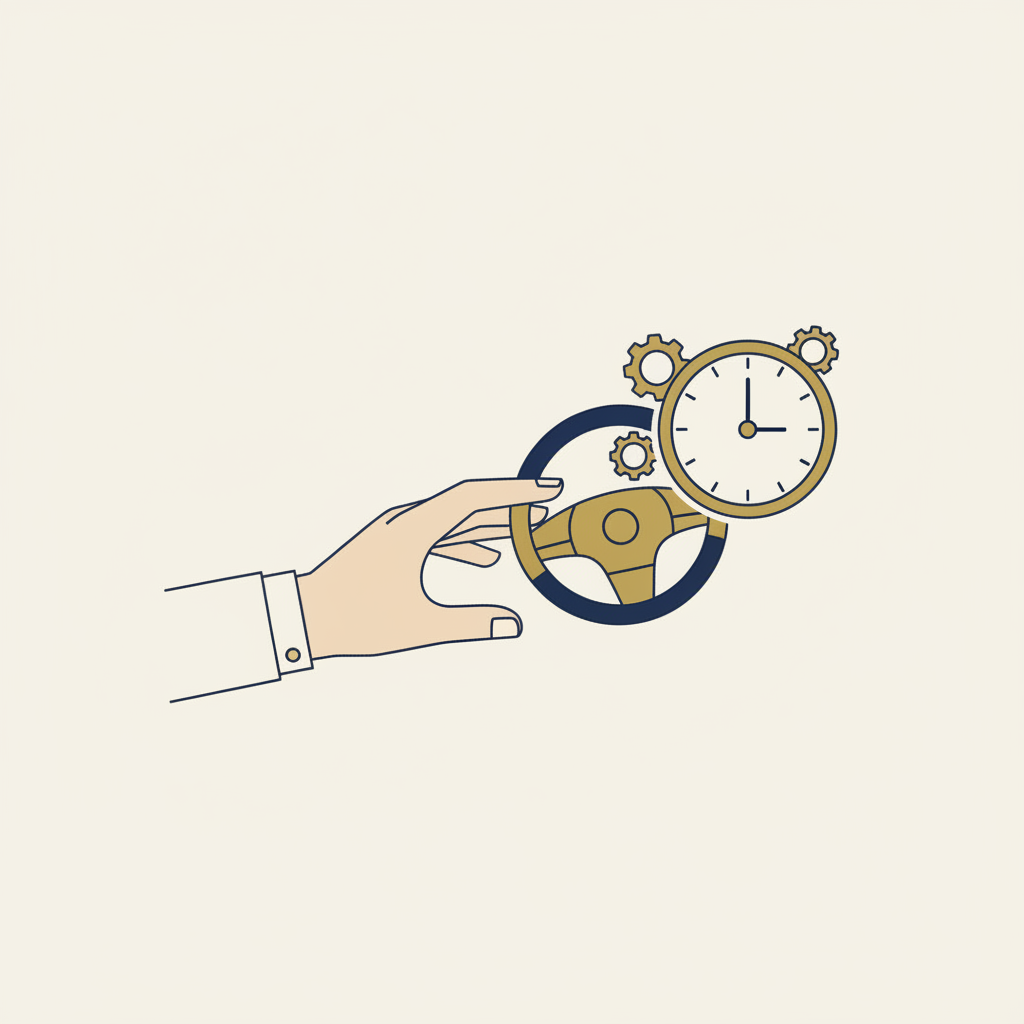
And whoever you give it to almost always knows less than you do.
The most expensive thing I did that quarter wasn't a bad move. It was a line.
We had the hire — a good clinician, the kind whose references actually call you back. Great interview. No real reason to pass. And at the end of the meeting, I'm the one who said it: "Let's keep looking, but stay close to her."
I thought I was leaving my options open. What I was really doing was passing the decision on to a stranger — a hiring manager at some other company who would decide my staffing levels for me by offering her a job first.
And that is exactly what happened. She went to work somewhere else. The seat sat empty for nine weeks — some 225 sessions that never got booked, roughly $45,000 in billable revenue. Gone. Not to a rival who outplayed me. Gone to a decision I didn't want to make, which got made for me by someone who didn't know my business and didn't care about it.
I didn't lose that hire to a "no." I lost her to a "maybe."
The decision gets made either way We use "maybe" as a pause button. We think it stops the clock — keeps things safe until we're ready. Failure is loud and obvious, so we avoid it, telling ourselves that not deciding yet is the careful, neutral move.
There is no pause button, though. Whether you make the decision or not, it gets made on time. The only thing "maybe" controls is who makes it.
And it's never you. If you defer, the call falls to whoever acts while you wait. The candidate who takes the other offer. The competitor who ships the feature. The contract that auto-renews. The good employee who leaves quietly, because the conversation you kept putting off told them everything they needed to know.
Each of them knows less about your business than you do — less context, less stake, worse timing. You gave them the wheel with your "maybe." You didn't dodge the decision. You handed it to the least-qualified person in the room. Usually the clock.
How to tell the difference I'm not advocating snap calls. "Just be more decisive" is bad advice — nobody wants to be slow. The one question that changed everything was this:
Am I waiting for something, or waiting to feel something?
Waiting for something is real. There's a trigger — a number to clear, a contract to lapse, a pilot to finish. You can name it, and you know what you'll do when it hits. That's not wishy-washiness. That's a decision with a timer on it.
Waiting to feel something is the trap. Ask yourself what you're waiting for and the honest answer is to feel more sure — and certainty almost never arrives on time, so the wait never ends.
I know what that one feels like, because losing the clinician wasn't the end of it. That same instinct — we can probably do better — kept the search open another three months. No trigger. No better candidate had surfaced; I just hadn't felt sure about the ones who had. The longer it ran, the thinner the pool got, and we eventually hired someone weaker than the person I'd let walk — mostly to end the discomfort of the empty seat. We've been paying for that hire ever since.
That's what a fake "not yet" does if you let it run. It doesn't keep your options open. It drains them — first the good one you lost, then the bad one it convinces you to take.
So now, when I hear myself saying "let's revisit this," I finish the sentence: revisit it when what, exactly? If I can name the trigger, we wait on purpose. If I can't, I'm not protecting my options. I'm giving them away, and the clock is already ticking.
The one I'm sitting on right now I haven't beaten this. As I write this, there's a "maybe" on my desk — something I've been "gathering information" on for longer than the information warrants. No trigger. I'm waiting for a sense of certainty, and I already know that sense isn't coming. Which means the decision is being made. Just not by me.
The part worth remembering We treat indecision as the safe square — the neutral ground where nothing happens because we haven't acted. But nothing happening is not what's happening. The more days you don't make the decision, the more it's being made — just not by the person with the most to lose and the most to go on.
A "no" keeps the call in your hands. A "yes" keeps it in your hands. "Maybe" is the only one that gives it away.
It was never a question of whether you'd decide. Only whether you'd be the one deciding — or whether you'd let a stranger, a clock, or a competitor do it for you while you waited to feel ready.
If decision-making, leadership, and organizational execution are of interest, I share more insights at MarkJCrawford.com and in my newsletter, Field Notes.